Life · Ministry · Faith

Month: September 2015

Fire is Life

campfire

One of my proudest moments as a Boy Scout came while on a winter camping trip as a guest of another troop. As one might expect, significant rivalries can exist between Scout troops, ours was no different. Each task became an attempt to show whose troop was the best. So it was that a little contest was set-up to see who could build a fire the quickest. Each of us was given one match and the charge to build a fire. The first to do it gained the glory for his troop. I should point out the little detail of there being two feet of snow on the ground, just to make it a challenge. At the shout “Go!” we each trudged through the snow and into the woods to figure out the challenge. Much to the opposing troop’s disgust ,in less than five minutes I had a raging fire going. The others had not yet even figured out how they were going to do it. It was an unprecedented trouncing of the competition. How did I do get a fire going so quickly in two feet of snow and with only one match? I can assure you I didn’t cheat in any way, but if I told you I would have to kill you. Sorry, I must maintain the pride of my troop. Why was it an important challenge? In a survival situation, the ability to build a fire can mean the difference between life and death.

In fact, for all of us, fire is life. Having a fire means the ability to stay warm when it is cold. Having a fire means the ability to safely prepare food. Around the fire, community happens. Stories are told and the legacy of generations is passed down. Even in our suburban homes, fire is still life. The fire may be a Lennox furnace, a Maytag stove, and a Kenmore microwave, but its importance to life is no less significant.

A person whose fire has gone out is in a vulnerable position. The cold night may suck their life away. The inability to prepare food puts them on the edge of starvation, because fire is life.

A few months ago, I was having a conversation with a fellow pastor. In that meeting, he shared with me an insight from an Egyptian Christian pastor that he knew. The insight pertained to a passage of scripture I never really understood. The passage comes from Romans 12 and Paul is giving instruction as to the practical realities of living as a follower of Jesus in a hostile world. Paul says to his readers, quoting Proverbs 25 “If your enemy is hungry, feed him; if he is thirsty, give him something to drink.In doing this, you will heap burning coals on his head.’ Do not be overcome by evil, but overcome evil with good” (Romans 12:20-21, NIV).

It seems that Paul has turned his own words onto their head. Is he really saying that our hospitality is an opportunity for us to heap guilt and suffering upon our enemy, as though we were pouring burning coals on their head? In effect, we serve them as a way to get back at them? While this meaning is not consistent with the surrounding verses, it certainly does seem to be the most obvious interpretation of the text. It’s an interpretation I have heard preached many times. Still it has never sat well with me as it appeared to be inconsistent with the larger context of the passage and the Bible. That was until my a recent conversation with my pastoral colleague. He shared that the Egyptian pastor said, as a middle easterner, he reads this passage differently. For him, fire is life. To heap burning coals upon your enemy’s head is to fill a jar with coals that may be taken home, carried upon the person’s head, so that they may restart their own fire. It is to give life to one whose fire has gone out. In effect Paul is saying, when your enemy has come to the edge of death and their defeat is imminent, give them life. Overcome the evil of your enemy with the goodness of life.

For millions of Syrians, their fire has gone out. They are in desperate need of someone to heap burning coals upon their heads and give them life before it slips away in the bitter night. Many Christians are tempted to look upon their suffering with fear. We wonder how many of their ranks are really members of ISIS, our enemy. Could we, by welcoming these refugees into our lives really be giving aid to our enemy and giving life to a person who, by our doing nothing, would be defeated? If our enemy’s fire has gone out, should we not let the darkness envelop them? Would this not be in the best national interest of our country?

Maybe it would be, but as citizens of the Kingdom of God, we live by a different standard of life. Our king says to us something so radical as “Love your enemies, do good to those who hate you.”

Pastor Stephen

Are we on the run?

crowded street
As I see the images of Syrian children washed up on Mediterranean beaches, my thoughts go to another fugitive—much older but hardly wiser. His name? Jonah. Unlike today’s refugees, however, Jonah wasn’t fleeing war, violence or hunger. He was running away from God. More precisely he was running away from the opportunity to be used as a conduit of God’s compassion. Jonah reveals his heart in Jonah 4:1-3:

But Jonah was greatly displeased and became angry. He prayed to the LORD, ‘O LORD, is this not what I said when I was still at home? That is why I was so quick to flee to Tarshish. I knew that you are a gracious and compassionate God, slow to anger and abounding in love, a God who relents from sending calamity. Now, O LORD, take away my life, for it is better for me to die than to live. (NIV)

Thousands of people in the ancient city of Nineveh (modern day Mosul, Iraq) repent and turn to God in sackcloth as a result of Jonah’s words, and Jonah’s response is to ask God to kill him. “It is better for me to die” (Jonah 4:3), he says, than to live and see you extend compassion to these people.

Jonah is angry. Really, really angry and perhaps rightfully so. After all, the Ninevites were Assyrians, people who weren’t afraid to flay Jonah’s countrymen alive in front of their wives and children and impale others on poles. In Jonah’s book, they were the absolute worst kind of people.

And yet God has a message for Jonah. Jonah thinks he has a right to be angry, but God has a right to be concerned. And so when Jonah stomps off and builds a shelter out of a few tree limbs, God does something. He sends a “Jack and the Beanstalk” type of vine–one of those vines that grows up super quickly. Sitting out in the hot sun all day, Jonah is exuberant about the vine and the shade it provides. However, the next morning his happiness once again turns to anger as God sends a worm to chew on the vine that God had made to grow. By mid-morning, he is steaming. The vine is wilted, the sun is beating down, and God has sent a scorching east wind. Once again he says, “It would be better for me to die than to live” (Jonah 4:8).

“But God said to Jonah, ‘Do you have a right to be angry about the vine?”

“I do,” Jonah said, “I am angry enough to die.” (Jonah 4:9)

“But the LORD said, ‘You have been concerned about this vine, though you did not tend it or make it grow. It sprang up overnight and died overnight. But Nineveh has more than a hundred and twenty thousand people who cannot tell their right hand from their left, and many cattle as well. Should I not be concerned about that great city?’” (Jonah 4:10-11). Jonah does not have a reply and neither do we. Suddenly we learn that God’s concerns are different and greater than our own. While we are worried about how someone has injured us or fearing someone taking advantage of us, God not only knows their name, he has nurtured them and cared for them. He has made them to grow and tended them. He cares deeply for them and values them.

Suddenly Jonah’s words in Jonah 2:8, “Those who cling to worthless idols forfeit the grace that could be theirs” pertain not just to those who worship other gods, they pertain to Jonah and perhaps to us as well. When Jonah chooses to flee from God in Jonah 1:3, he clings to a worthless idol and chooses to forfeit the grace or hesed (covenantal love) that could be his. Jonah is so concerned about keeping God’s covenantal love or hesed to himself that he fails to realize that in doing so, he is actually leaving it far behind. When Jonah runs away from the LORD, he isn’t just running away from the LORD, he’s running away from a relationship with the LORD—and all because he doesn’t want God to extend to his enemy the same kind of grace and compassion or covenantal love that he himself has received and experienced time and time again.

The irony of Jonah’s story is that he cannot outrun God or his covenantal love. When Jonah begins to sink into the depths of the sea, God sends a fish to eventually take him to dry land. When Jonah stomps off in a pout, God sends a vine to shade him. And when Jonah is drowning in self-absorption and self-righteousness, God sends a worm to destroy the vine and a scorching east wind to heat things up again. God has a lesson for Jonah and for us. Those people you think are far from me—those people you view as enemies—I love them. I have tended them and I know them. I am concerned for them.

The same might be said about Syrian refugees today. God knows them, has tended them and caused them to grow. When we choose to hold up fear rather than to extend love and hospitality are we not behaving in the same way as Jonah? Are we in our attempt to protect ourselves, our way of life and even our religion actually running away from God and forfeiting the covenantal love and grace that could be ours? Can we not hear God say, “But Syria has many, many innocent people. Should I not be concerned about that great country? Should I not be concerned…”

Pastor Laura


Author’s note: I am not suggesting Syria is an evil country or that the Syrian people are evil or that they are the enemy. I am simply responding to the general fear and suspicion currently being propagated towards Syrian refugees.

Unclaimed treasures: thoughts on the Syrian refugee crisis

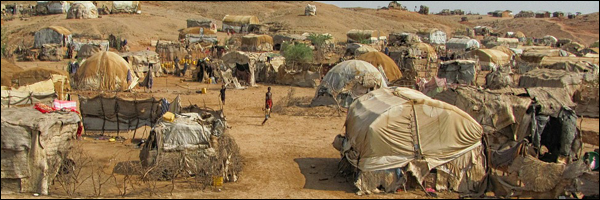
refugee camp

When I was around seven, my mom got a call from the American Red Cross. They were trying to track down my dad for a Vietnamese refugee staying in a Philippine refugee camp. The young man had escaped from Vietnam and made his way by boat to the Philippines. Years before, my dad had sponsored this young man’s Amerasian sister through the Pearl S. Buck Association. When South Vietnam fell to the communists, my dad lost all contact with the family. Now Michael (not his real name) was trying to reach the only person he “knew” in the United States. Would my dad sponsor him to come? My parents prayed about it and knew that if they were in such a situation that they would want someone to help them. This decision lead to days and perhaps months of preparation–I honestly don’t know how long it was from the time my parents received the phone call from the American Red Cross until we picked Michael up from the airport. I can remember going to Refugee Resettlement meetings with my mom. One of the women present encouraged others to be sure they got everything out of the “vanilla” envelopes they received from the government. She had once missed an important document for a refugee because it was stuck to the bottom of the “vanilla” envelope. As a seven-year-old, I wondered why people were sending paperwork in empty cartons of vanilla ice cream.

When Michael arrived at the airport, he had very, very little. It was winter and he had come from the Philippines. He had on a red, white and blue coat and carried a small blue bag–about the size you would put a bowling ball in–that was it. We took him home and my dad got him set up in the bedroom we had gotten ready for him in our basement. We had been a one bathroom house up until that point, but my parents had a bathroom built in the basement in preparation for Michael. I’m not sure how long Michael lived with us–maybe about six months. I remember him sitting in the living room drawing pictures with magic markers for my sister and me. One picture was of a two story house with a clothesline and gardens. That was his family’s home before Vietnam fell. It seemed to be a nice house and I remember thinking that he liked it a lot. The picture looked peaceful. When he decided to try and escape Vietnam, he went to stay with his grandmother who lived near the coast. When he got up in the morning to leave, she was dead. He ate bananas from a tree and managed to get on a small boat. There were lots of people on the boat. He drew a picture of the boat. The boat was attacked by pirates. The pirates took the gold ring his father had given him when he left. The pirates also took the babies on board and tossed them into the ocean. The babies’ parents jumped in after them to save them and drowned. Somehow Michael and some of the others on his boat managed to survive. Perhaps the pirates got what they wanted and left them alone. I don’t know if he ever said. Eventually, they got to a beach and, well, the rest is history. I know it wasn’t that easy, because he talked about surviving on bananas.

In some ways, the time Michael was in my life on an everyday basis was short, but I have many memories. I can remember my mom loading him and my sister and me in the car and taking us to the Oriental Market, so he could shop. He had his own money and I remember he bought a package of “candy” and opened it up to share with my sister and me. Expecting something sweet, I just about gagged on the dried squid he proudly offered and was probably not very gracious. He had learned how to play the piano while in the refugee camp and would sit down and play for us. Once while he was playing, I came up to him, held up my foot and said, “Trick or treat, smell my feet, give me something good to eat!” He stopped playing and disappeared out the front door. When he came back, he had a package of candy–he had run all the way to the grocery store and back, which was at least a mile away.

I also remember going to Vietnamese banquets for New Years and other important events. Michael would play the keyboard and we would listen to people sing and talk in Vietnamese. I usually liked the food at these events. Some of my favorites were the egg rolls, chips that I thought looked like Styrofoam but tasted good, and the ever present Vietnamese-style “bundt” cake–I’m pretty sure it had lots of eggs in it. I got used to being one of the only blond-headed kids in the room and really didn’t mind it. Honestly, I kind of enjoyed it.

I’m sure as a family that we missed opportunities to make Michael feel more welcome, but we helped him get here and we still see each other. Today he and his wife are long-time business owners in my hometown. When my dad died, he was there at the graveside with his son. Seeing him meant so much at that moment.

Today, when I see pictures of young Syrian children washed up on shore, I’m filled with sadness. They could be my own children and it seems like this could be avoided. I know something can be done about it, because people throughout history have opened up their homes to refugees seeking asylum. And I envy countries like Germany, Iceland and Greece whose people are opening their hearts and homes to these people. Is is easy? No. Is it doable? Yes. Is it the right thing to do? Yes. Will it pay dividends? Yes. Will it shape your family and worldview for the better? Yes, definitely yes! Is America missing out? Sadly, yes. Every day, we miss out on beautiful, unclaimed treasures. Countless people who could enrich our lives, our homes, our communities and our children’s lives. We are the poor ones.

Pastor Laura

Where are the coal piles?

Coal Minors

The industrial revolution was billowing out changes to all of society at a never before seen rate. Changes which cast people into a darkness of soul greater than the soot billowing from the industrial machine. As the world was driven into this new era the structures of society, founded on an agrarian community, were unable to accommodate the changes. The home, the church, labor, government, education, all buckled on the verge of collapse under the weight of change.

In the age of the industrial revolution, John Wesley saw the church’s patterns of the past no longer worked, but a solution for the future alluded him. Then a friend, George Whitefield, would call Wesley to leave the security of his pulpit to go into the fields to preach the good news of Jesus. The challenge to Wesley from Whitefield was for Wesley to go to where the people were at rather than waiting for to come. The truth is they were never going to come. In no time Wesley would find himself standing on a coal pile in the faint light of dawn preaching the good news of Jesus to minors as they entered the murderous bowels of the earth.

Once again the pulses of change are colliding against the structures of our life. The great empires built on industry are no more and we are in a world struggling to find a new normal without a pattern or guide to follow. The home, the church, labor, government and education are all buckling under the unrelenting weight of change.

Wesley would leave the comfort of his pulpit to go where the people were at because they were never going to come to him. What about us today? Where are the coal piles today?

Please share your thoughts in the comments below or on Facebook.

Blessings,
Pastor Stephen

© 2026 jumpingjersey

Theme by Anders NorenUp ↑